The 7 June 2026 transposition deadline came and went, national laws are still arriving country by country, and the conversations we were having with customers in June sounded nothing like the ones we were having a year earlier. The questions were no longer about what the law would require. The questions were specific: when they need to send the annual notice, which pay figure goes into a written Right to Information (RTI) answer to an employee, and what a compensation team is supposed to do when a request arrives from a country whose law has not taken effect yet.
We wanted to know how widespread that shift was, so one month after the transposition deadline, we ran a survey to find out how our customers are putting the Directive into practice. One hundred and one enterprise organisations answered across 11 industries, and every single response came from the person who owns EU Pay Transparency Directive readiness inside the company — not a general HR audience. That distinction is the reason we ran this ourselves instead of outsourcing this research to a third party. The people who answered are the ones who complete the pay gap report and write the first response when a RTI request lands. Our customers average 35,000 employees, roughly half of them employ more than 1,000 people in the EU, and together they analyze more than 10.5 million employees a year, so this is a read on how the largest and most operationally complicated employers in Europe are handling the Directive right now.
The results are more lopsided than we expected. Enterprises have almost entirely settled the strategic questions that consumed the last two years of planning, and they have barely started the operational work that any single employee can set in motion with one right to information request.
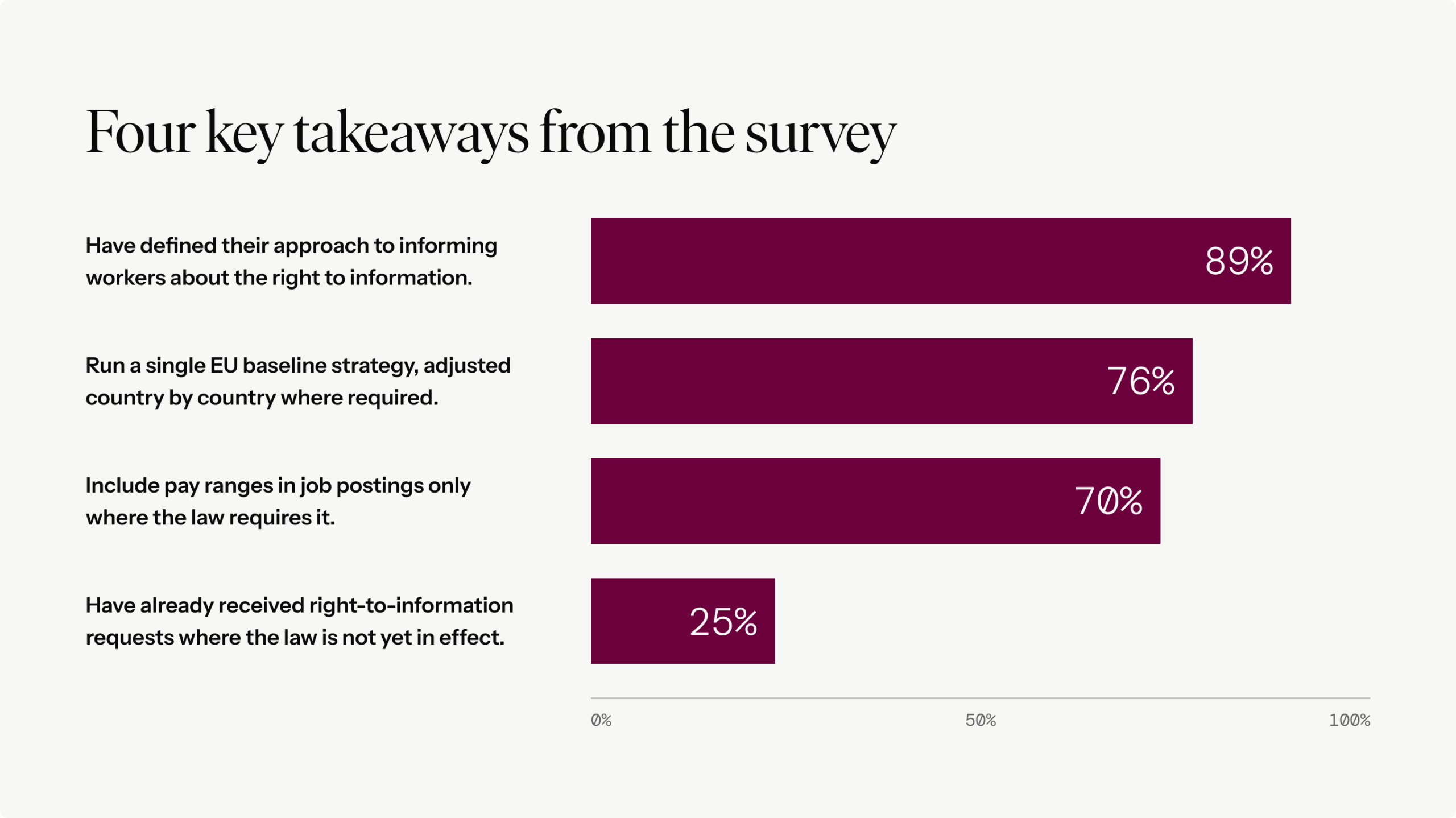
Here are four key takeaways from the survey:
- Eighty-nine percent of employers have defined their approach to informing workers about the right to information.
- Seventy-six percent now run one EU baseline strategy and adjust it country by country only where a national transposition adds a requirement.
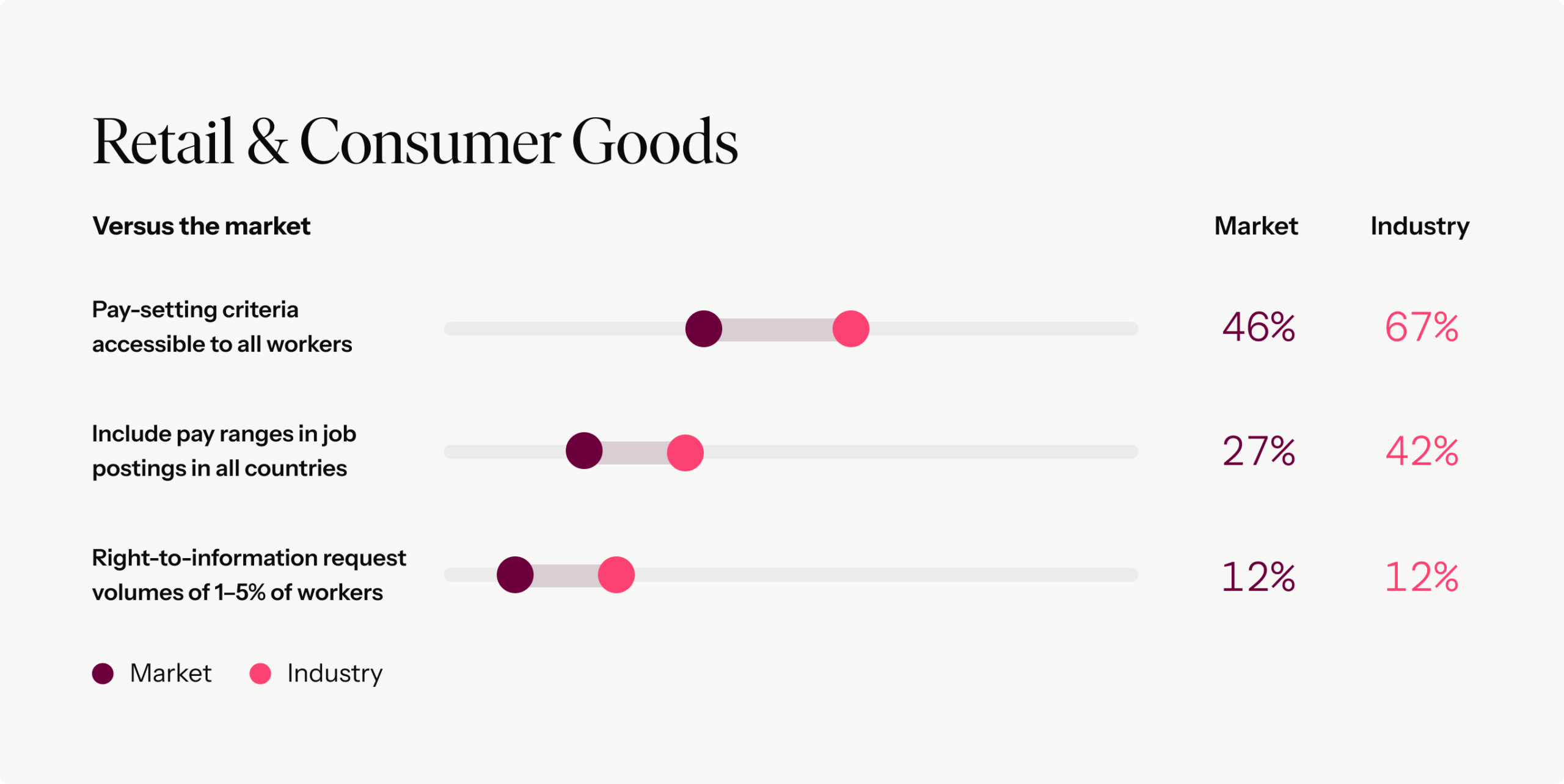
- Seventy percent include pay ranges in job postings only in the countries that require them, and just 27% post ranges everywhere they hire across Europe.
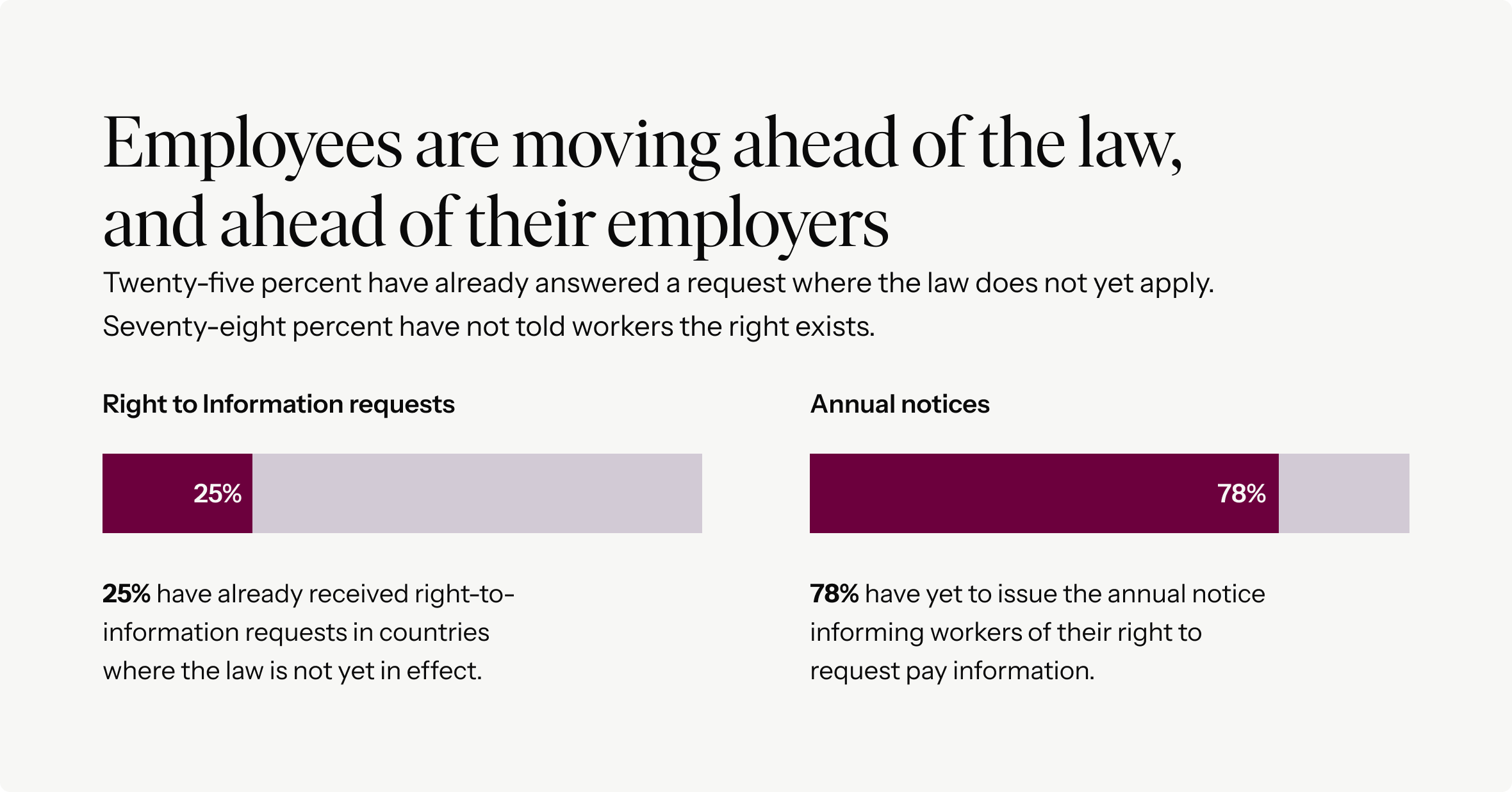
- Twenty-five percent have already answered a right to information request in a country where the directive has not taken effect. (We’ll come back to this one!)
Local nuance on the EUPTD is smart. Localized reinvention is not.
Three in four organisations have landed on the same answer to the question that dominated 2024 and 2025. They maintain one EU-wide set of pay transparency policies and processes, and they adapt that baseline only where a specific national law requires something extra. Twelve percent still design separately in each country, 7% apply one global approach across their entire footprint, and 5% have not chosen.
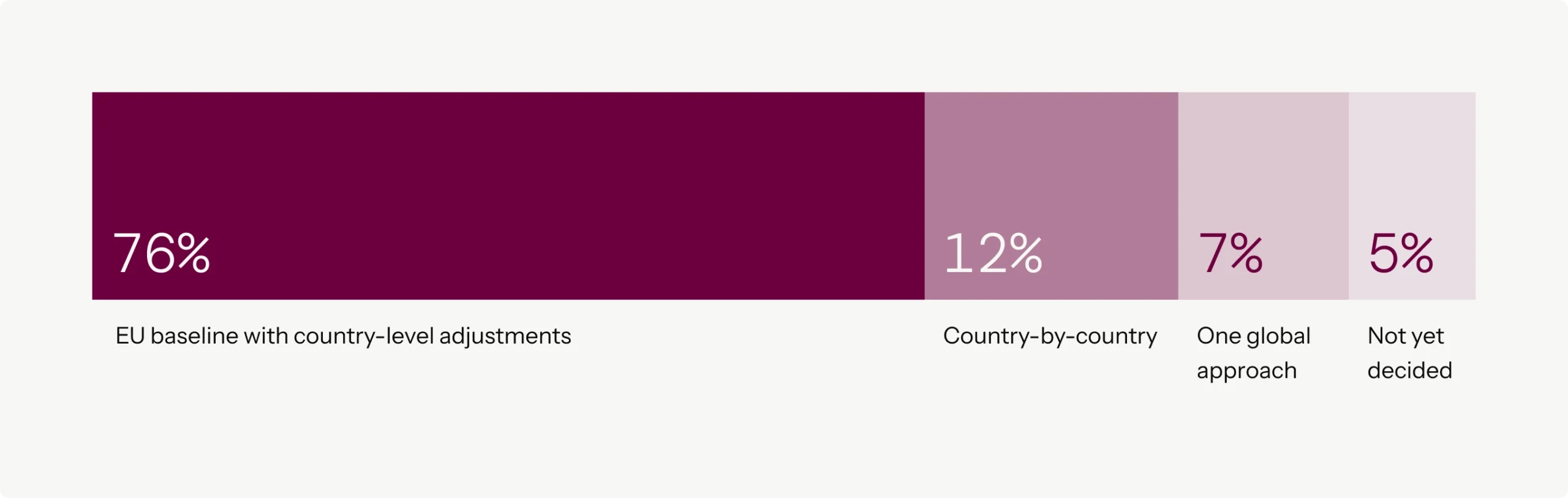
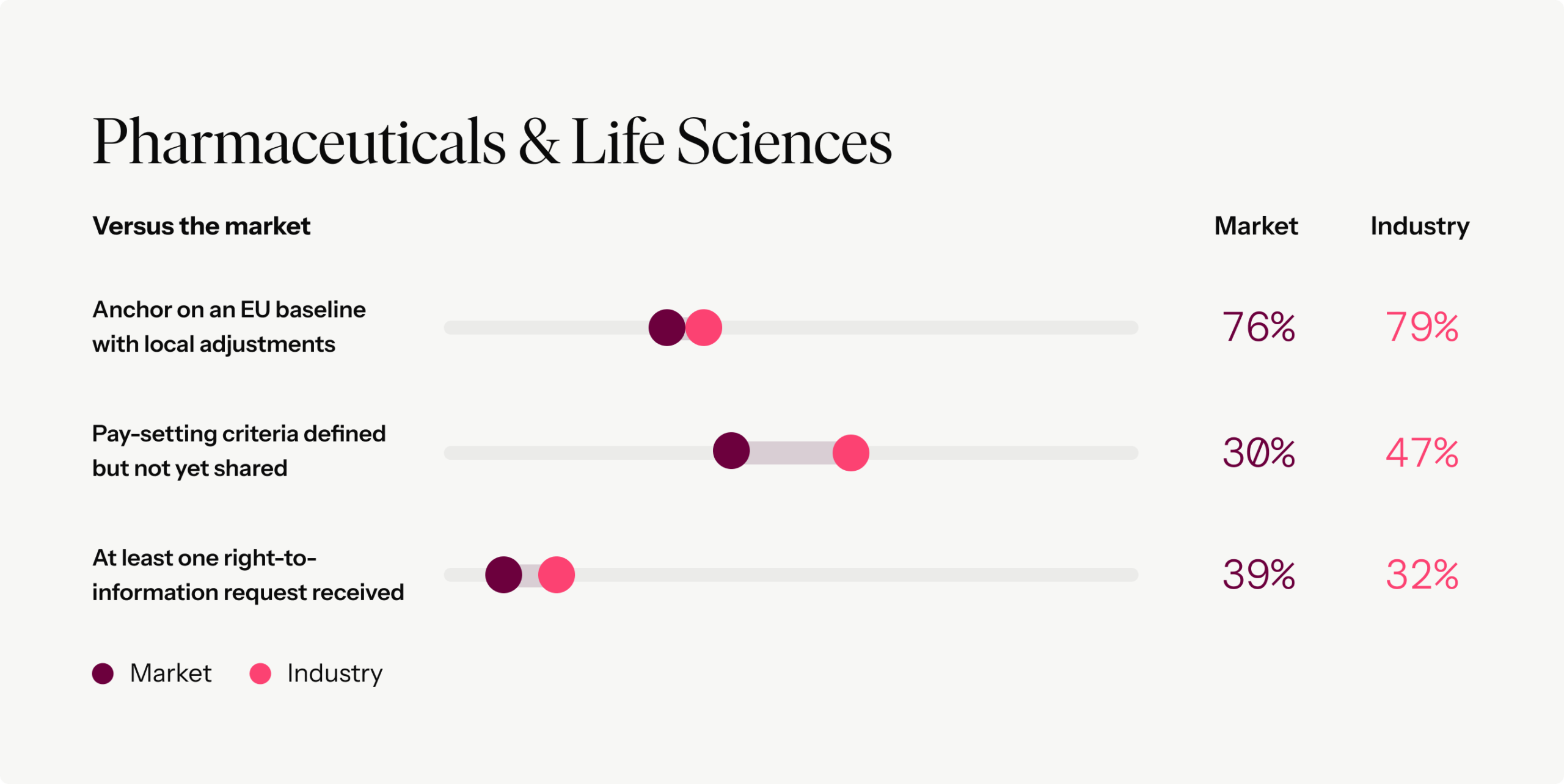
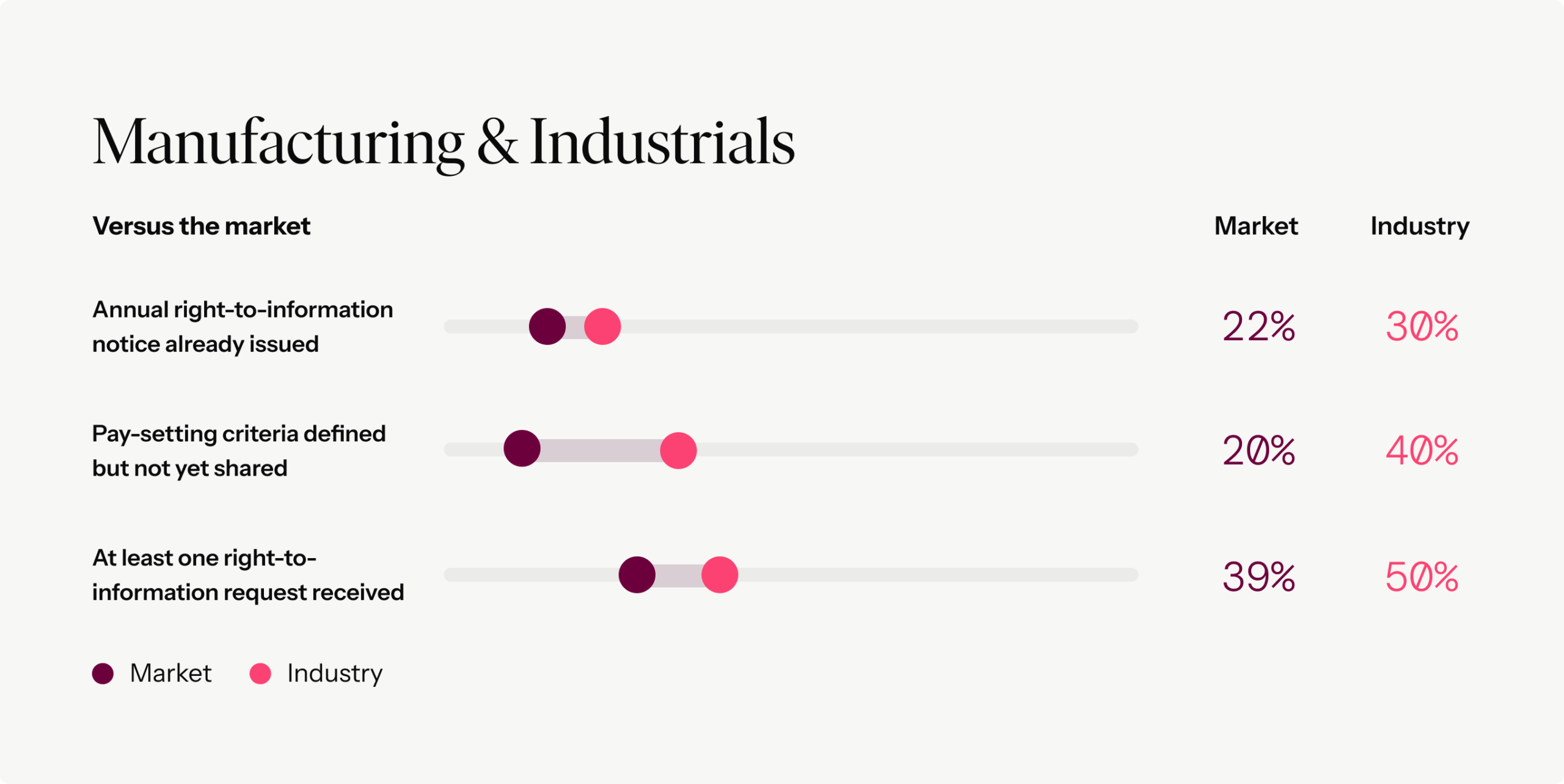
What makes this convincing is how little the data varies by sector. Eighty-three percent of Retail and Consumer Goods use a baseline EU strategy with country-level adjustments. Manufacturing and Industrials sits at 80%, and Pharmaceuticals and Life Sciences at 79%. Industries with almost nothing in common in terms of workforce composition, works council relationships or hiring patterns have arrived at the same design. When convergence is that tight, it usually means the alternatives proved unworkable at scale rather than that the winner proved elegant. Anyone still weighing 27 parallel country programs against a single baseline should treat this as the market having already run that experiment.
Compliance is table stakes. Competing for talent takes more.
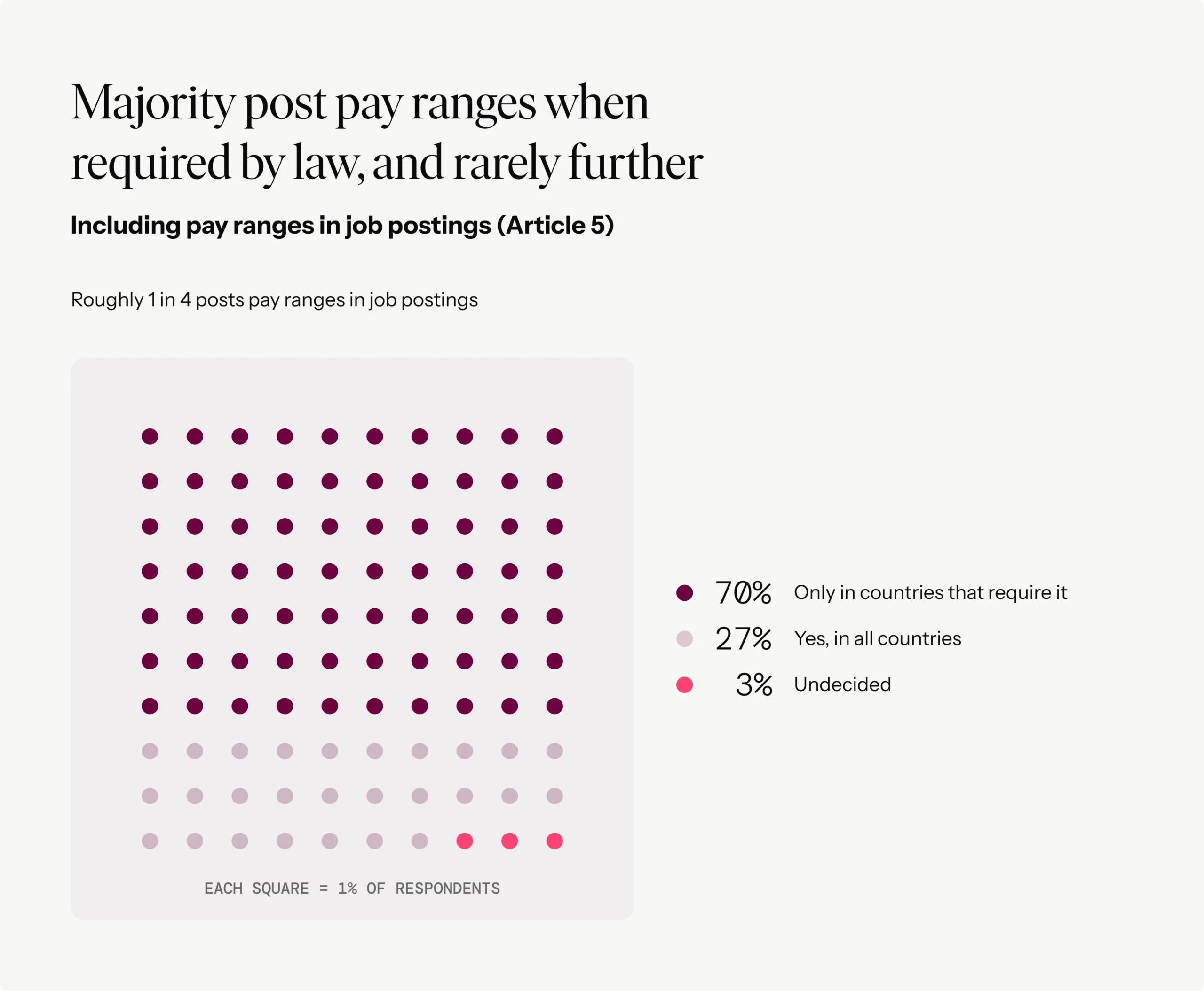
Article 5 of the Directive requires employers to give candidates pay range information before the interview, and most organizations are meeting that obligation where it applies, but going no further. Seventy percent include pay ranges only in countries that require them, 27% post ranges in every country where they operate, and 3% have not decided.
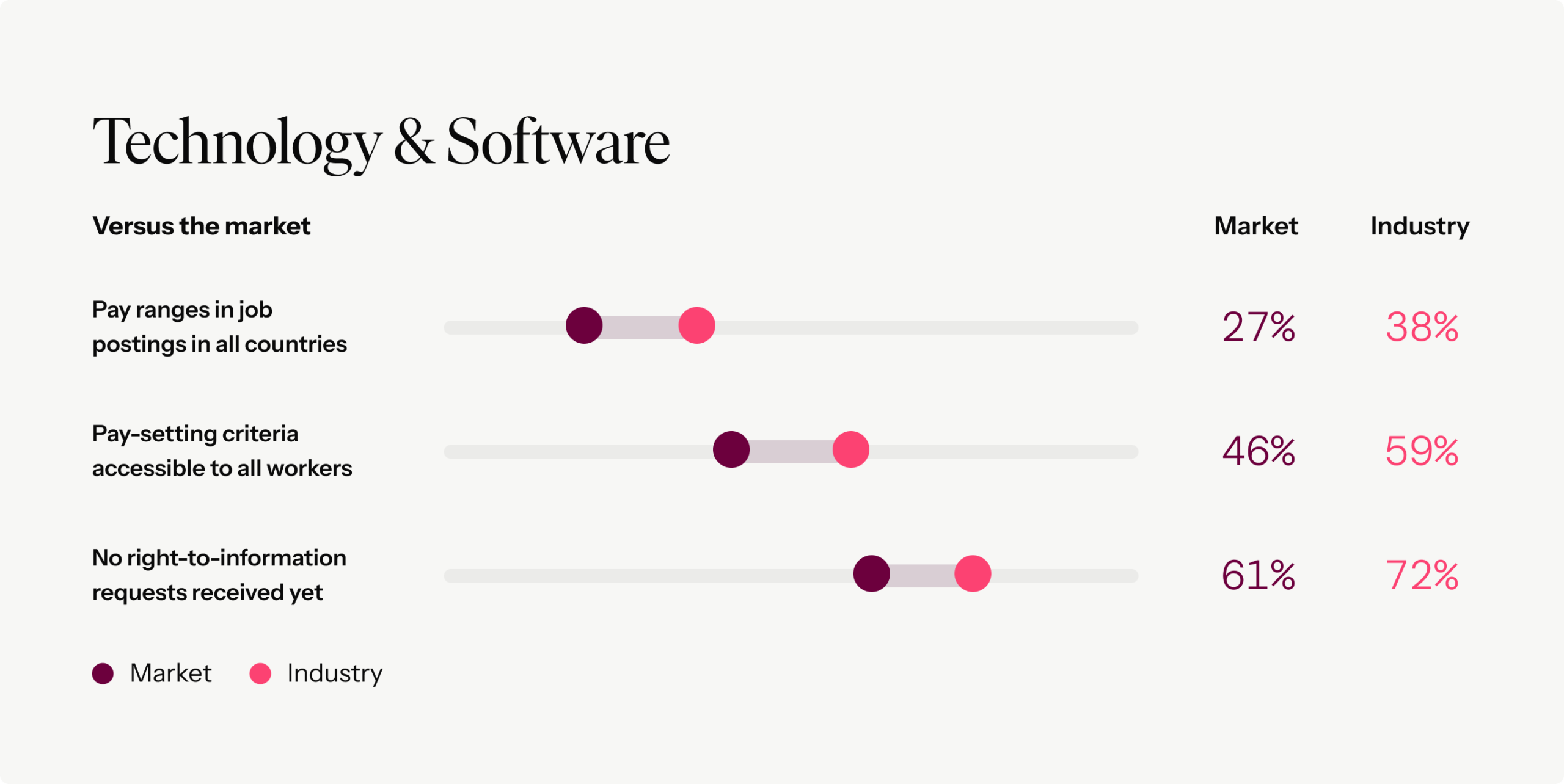
The sector differences here are ones a talent leader should care about, as they compete for talent. Retail and Consumer Goods employers post ranges everywhere at 42% and Technology and Software employers do so at 38%, both well above the market figure of 27%. Pharmaceuticals and Life Sciences is the most compliance-led industry we measured, with 74% posting ranges only where required. If you are recruiting against a Technology or Retail employer in a market with no posting requirement, that gap turns into a candidate experience problem long before it turns into a legal one.
The criteria are written and the publishing has stalled.
Article 6 of the Directive asks employers to make the criteria they use to set pay and determine progression accessible to workers. Seventy-six percent of our respondents have those criteria either defined or shared, which sounds like real progress until you separate the two groups. Forty-six percent have opened their criteria to all workers, 30% have criteria that are written and sitting unpublished, 20% are still developing them, and 5% have not started.
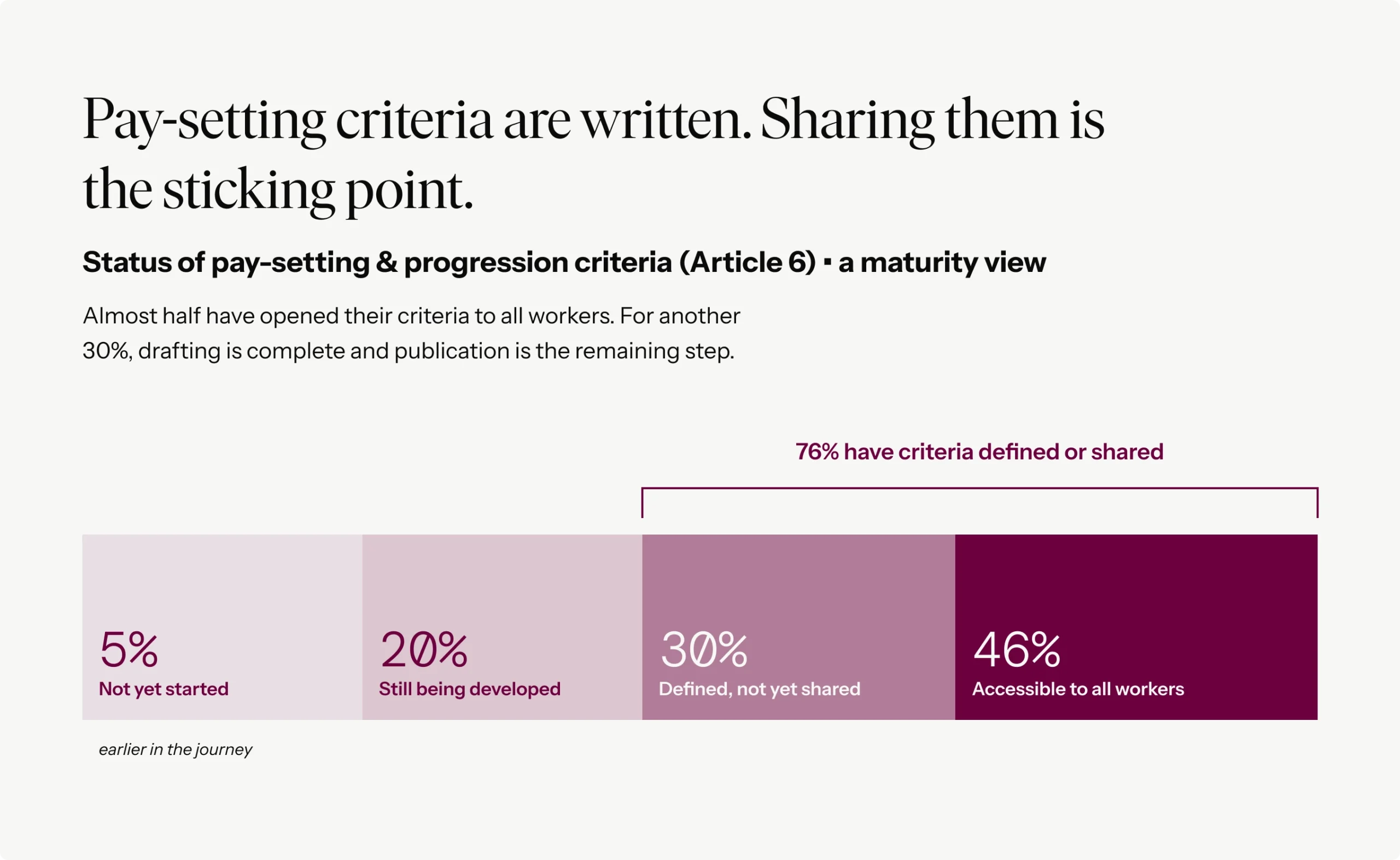
We think the 30% finding is the most revealing number in this section. Those organisations have finished drafting, so all that remains is a decision to publish; and that’s where the uncomfortable internal conversations happen. Managers worry that the written criteria will not survive a conversation with a direct report who asks why they are on the lower half of a range. Compensation teams sometimes know that the criteria on paper and the practice in the field do not fully agree, and publishing turns that difference into something an employee can point at. Retail and Consumer Goods has pushed through this, with 67% having shared; Technology and Software is at 59%, while Pharmaceuticals and Life Sciences is close to evenly split with 42% shared compared to 47% written and held back.
Right to Information is where the explainability gap gets real.
Article 7 (Right to Information) converts pay transparency from a reporting exercise into an individual right. A worker can ask for information about their own pay and average pay levels for their category of work, broken down by gender. Under the Directive’s baseline requirements, employers have two months to answer. Several countries have laws that require even shorter turnaround, with Poland setting 30 days. Employers also have to tell workers once a year that the right exists.
Four decisions sit underneath that obligation, and our survey found no market standard for any of them.
1. The notice has not gone out.
Seventy-eight percent of respondents have not yet issued the annual notice informing workers of their right to request pay information. The Manufacturing and Industrials industry leads at 30% issued, and across all four industries we broke out, between 63-75% still have no fixed date for it. This is the easiest gap in the entire survey to close, because writing and sending a notice is a communications project, not a systems build. It also serves as the clearest external evidence that a readiness program is real rather than planned.
2. Most have chosen an RTI channel.
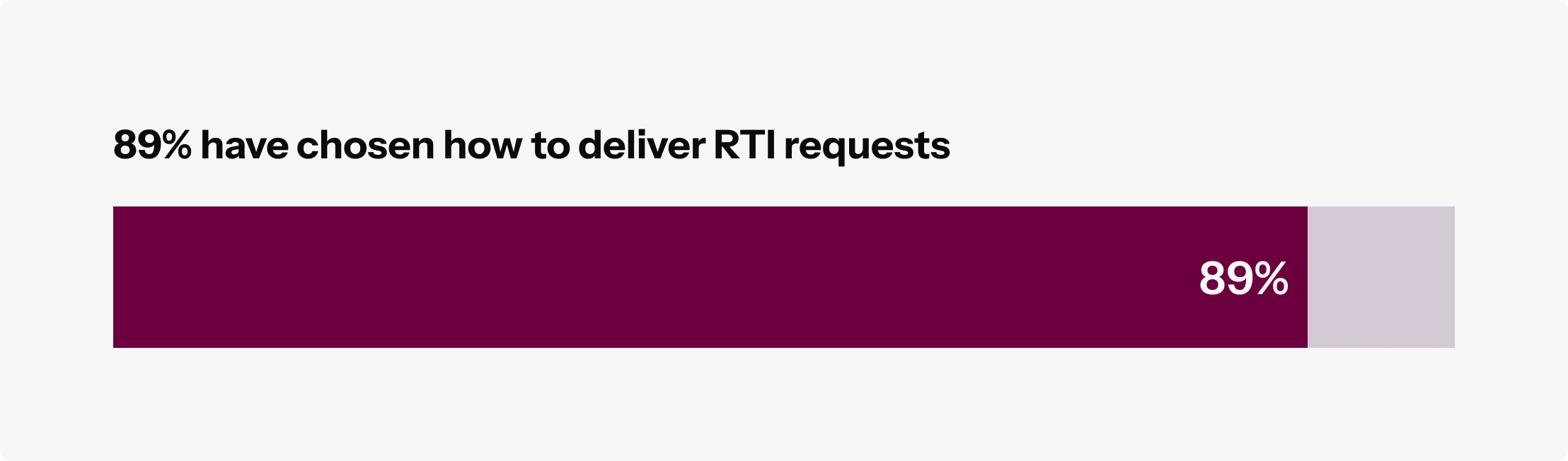
Most organisations have already decided how they’ll notify workers. Eighty-nine percent have chosen a channel to distribute responses to RTI requests, and only 11% are still undecided. Forty percent will centralize the notice on an intranet, policy page, or HR portal: a self-service hub workers can check on their own time. Thirty-seven percent will push it directly, by email or message, to ensure every employee actually receives it. The remaining organizations are mixing the two or still deciding. Several manufacturers described pairing email or intranet with printed notices in plants, so that production employees who don’t log into a portal still get the notice. That instinct is the right one, because a notice sitting on a portal that deskless workers never log into has not informed anybody of anything.
3. The definition of pay splits three ways, for now.
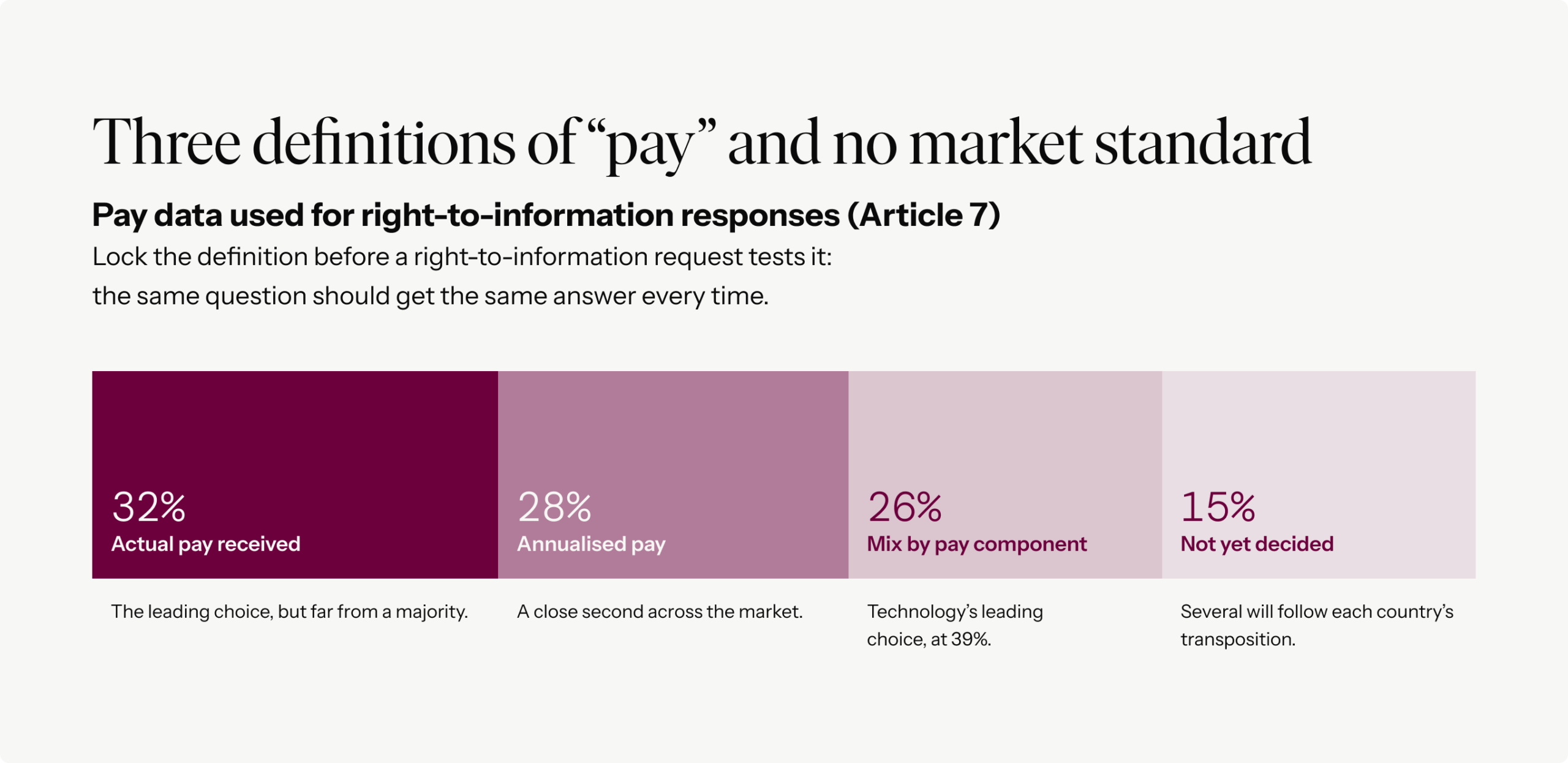
Asked which pay data will sit behind an RTI response, 32% said actual pay received, 28% said annualized pay, 26% said a mix that varies by pay component, and 15% haven’t decided. Technology and Software leads on the mixed approach at 39%. There’s no market standard yet, but the Directive isn’t silent on the concept: it defines pay as what a worker actually receives, the basic or minimum wage plus the bonuses, allowances and other components paid on top. That framing tilts toward actual pay received, which makes the 28% using annualized pay a step removed from the text, and a decision they may have to justify.
4. The volume is a trickle so far, and the first spikes have arrived.
Where the law is already in effect, 61% have received no requests at all and 96% report volumes under five percent of headcount. Manufacturing has the widest spread of any sector, with half of respondents having handled at least one request.
Two organisations, both in technology, are already fielding requests from more than 30% of their workers. That’s not surprising: no workforce scrutinizes its own pay as closely as tech, where equity trackers, refresh cycles, and an entire compensation-benchmarking ecosystem have made pay comparison a professional habit. Give that workforce a formal right to request peer averages broken down by gender, and many will use it. Tech also runs on high-velocity internal communication, where one employee posting about RTI in Slack can reach the rest of the company quickly.
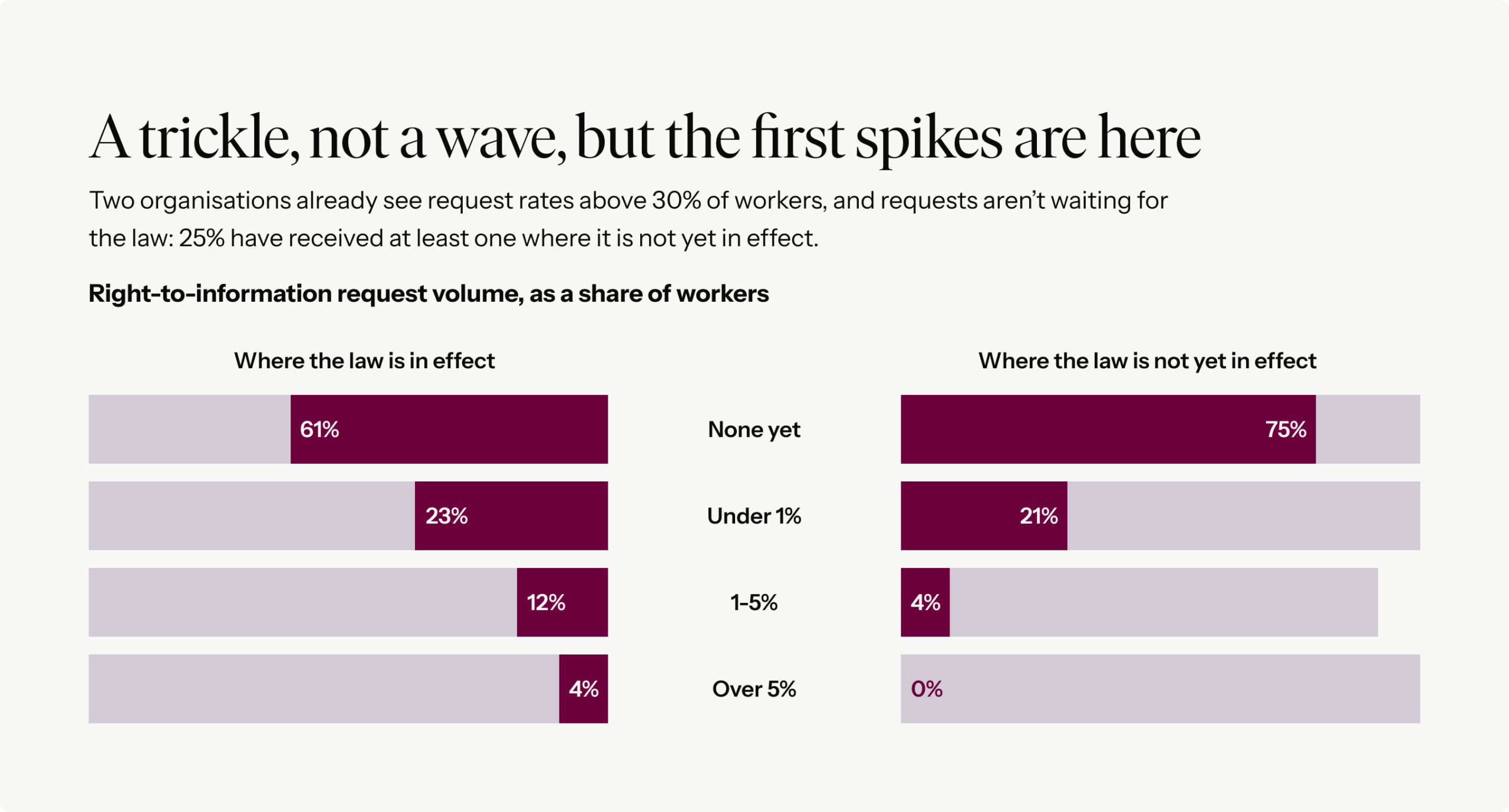
Now go back to the 25% that have already answered a request in a country where the law has not taken effect. Read that alongside the 78% who have not issued the annual RTI notice informing employees they can request pay data for their peers, and the reassuring volume numbers look different. Employees are asking before the law tells them they can and before their employer has told them they can. Since the volumes we measured in July were measured on a population that largely doesn’t know the RTI exists (at least not directly from their employer), and because the largest countries in Europe have not yet transposed the Directive, a spike might yet be around the corner.
What large enterprises are actually worried about
When we asked what makes this work difficult, two answers came back at the top, and neither of them is about reporting:
- The first is pay decisions made without a documented rationale, which makes those decisions difficult to defend after the fact.
- The second is inconsistency across teams in how pay decisions get made in the first place.
Retail named documentation as its top challenge, Pharmaceuticals and Manufacturing both named inconsistency, and Technology named the gap between pay strategy and what actually happens in practice, which is the same problem viewed from a slightly different seat.
A Right to Information request does not create that exposure. It makes an existing governance gap visible, one employee at a time, in writing, on a two-month clock. Organisations that can explain why a specific person is paid what they are paid, using a rationale captured at the moment the decision was made, will find Article 7 to be administrative work. Organizations that lack that rationale will find that every request turns into a research project, and the research will be conducted under a legal deadline by people who did not make the original decision.
What to do in the next 90 days
First, make your worker categories defensible. The pay figure is only as sound as the grouping it’s averaged across.
Second, lock down your definition of pay and make sure you’re applying what each jurisdiction requires, since scope and disclosure may vary by national transposition.
Lastly, establish how you’ll respond to requests, including:
- A clear response process;
- Systems that track each jurisdiction’s deadline so none slips (e.g. two months under the Directive, but far shorter in places like Malta at eight days);
- The minimum group-size threshold before you’ll disclose a category average; and
- A route for requests that come through works councils or employee representatives rather than individuals.
This is the difference between a program that exists on a slide and one that exists in the business.
Ready to tackle Right to Information and the EU Pay Transparency Directive?
Methodology: Syndio fielded this pulse survey in July 2026, one month after the 7 June 2026 transposition deadline. One hundred and one enterprise organizations across 11 industries responded, and each response came from the people responsible for EU Pay Transparency Directive readiness within their organization. Industry deep-dives are reported for the four industries with more than seven responses: Technology and Software with 32, Manufacturing and Industrials with 20, Pharmaceuticals and Life Sciences with 19, and Retail and Consumer Goods with 12. Smaller industries are included in the totals and not broken out separately. Findings reflect a single point in time as national laws continue to transpose. This is a pulse survey of what customers report about their own readiness, and it is intended to inform planning rather than to certify compliance. Note: Percentages are shares of those who answered each question. Figures may not total 100% due to rounding.
The information provided herein does not, and is not intended to, constitute legal advice. All information, content, and materials are provided for general informational purposes only. The links to third-party or government websites are offered for the convenience of the reader; Syndio is not responsible for the contents on linked pages.